Amid Sierra Leone/US Health Agreement, SLAM Calls on Citizens, Health Workers, Civil Society & Diaspora to Demand Accountability
Quick Summary
Sierra Leone and America have signed health cooperation agreement as pressure group SLAM calls on internal stakeholders to demand full accountability.
SIERRA LEONE’S US HEALTH COOPERATION AGREEMENT DEMANDS TRANSPARENCY, ACCOUNTABILITY, AND PROTECTION OF THE PEOPLE’S FUTURE – PRESS STATEMENT – May 25, 2026
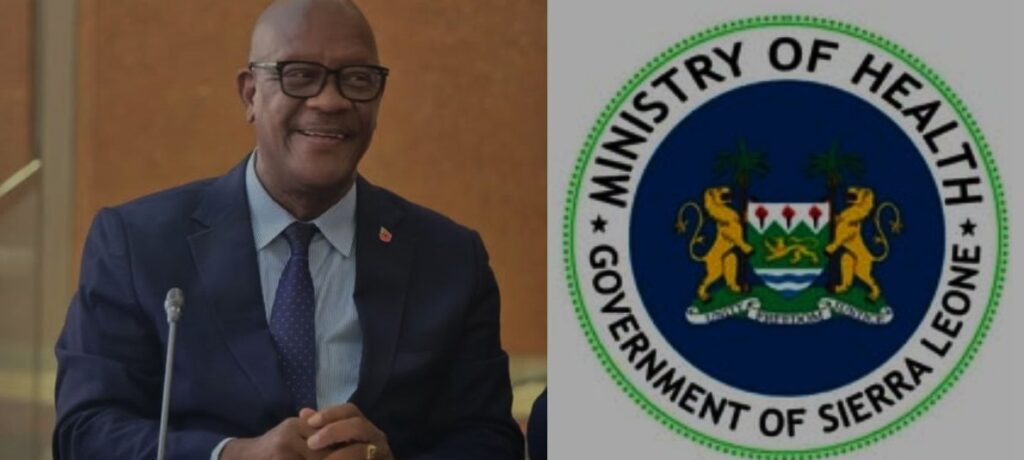
The Maada Bio administration’s signing of the US/Sierra Leone Health Cooperation MOU (Dec 22, 2025) – a $129 million, 2026-2030 health agreement–marks a pivotal moment for our country. This five-year partnership pledges support for HIV, TB, malaria, maternal/child health, surveillance, and workforce development. (Photo: SLPP Health Minister Dr Austin Demby).
SLAM-GLOBAL welcomes new resources, but sound the alarm on key gaps: capacity, financing, transparency, and sovereignty. We call on citizens, health workers, civil society, and the diaspora to demand full accountability. The U.S. MOU frames a “modernized” aid model that front-loads roughly $30M in 2026 for labs, surveillance, and staffing, then requires Sierra Leone to co-finance and ultimately fully self-fund by 2030. Official statements insist Sierra Leone will remain “in charge” of data and priorities. But independent analyses and experiences in other African countries warn of serious risks if this deal is not managed with full transparency and safeguards.
- The MOU is one element of the U.S. “America First Global Health Strategy,” which is shifting foreign aid away from open assistance toward conditional, bilateral compacts.
- Unlike past USAID grants, this model demands Sierra Leone dramatically increase its own health spending and meet strict benchmarks or face funding cuts. Some countries have already pushed back (e.g. Ghana cited data-sharing demands; Zambia and Zimbabwe halted talks over similar clauses).
- Crucially, Sierra Leone’s full commitments and safeguards are not public. The government has shared only celebratory photos and statements. Citizens have seen no full text of the MOU or its data-sharing annex. In an open democracy, we must insist on immediate publication of the agreement text, followed by parliamentary debate and independent review. Factual Context: The government’s press release confirms the deal’s value and goals. It emphasizes “self-reliance” and “alignment with national priorities”. The U.S. Chargé noted these MOUs are tied to an America First strategy that “requires co-investment and performance benchmarks”. In Sierra Leone’s case, the US will provide ~$129M while Sierra Leone must contribute ~$44M of its own funds (about 25%). The targets are ambitious: a 75% cut in malaria deaths, 98% of people knowing their HIV status and on treatment, universal maternal/child health care and a 7-1-7 outbreak detection system. All sounds positive in theory, but the how is critical. Key Concerns and Risks:
- Institutional Capacity: Sierra Leone’s public health system remains highly donor-dependent. Our Ministry of Health and agencies have limited budgets, staffing, and data systems. To administer $129M and complex programs, we need robust financial management, reporting, and healthcare delivery capacity. Yet independent audits and National Health Accounts consistently show public health spending is far below need, with donors and NGOs (like WHO, CDC, Global Fund, etc.) historically filling gaps. Moving to a government-run model requires a detailed readiness assessment and a phased transition plan, which has not been publicly outlined. Without it, the risk is massive service disruption.
- Co-Financing Burden: The U.S. framework expects Sierra Leone to rapidly scale up domestic funding. In practice, this means huge budget shifts. For example, Zambia faced demands to raise its health budget by ~$1 billion over five years–untenable for its economy. Sierra Leone’s economy is fragile (roughly 7% of the budget goes to health, far below the 15% Abuja target). It is unclear how we will find the extra $44M (or more) while still funding schools, roads and food security. Failure to meet these co-payments could freeze vital programs midstream, harming pregnant women, children, and HIV patients.
- Data Sovereignty and Privacy: Reports from Ghana and Kenya show that U.S. MOUs demand real-time sharing of health data a nd even biological samples. 3 Ghana rejected a similar agreement, warning that the “terms requiring sharing of sensitive health data” threatened national sovereignty. Kenya’s High Court has halted its MOU over fears that personal medical records could be accessed without consent. In Sierra Leone, no data protection law is in force. Yet this MOU likely obligates us to feed data on HIV status, TB, maternal health, and outbreak surveillance into U.S.-linked systems. Who protects our citizens’ private information? The MOU text (still secret) must be vetted for any clauses ceding control of our data.
- Transparency and Oversight: The government’s decision-making has been opaque. The full MOU has not been published, nor was there public consultation or parliamentary debate. This high-stakes contract affects national budgets and health laws. We demand that every citizen has the right to see the text and related agreements, and that elected representatives scrutinize them first. Without openness, trust is impossible. (Kenya’s example shows that trusting government promises alone is not enough).
- Transition from NGOs: For decades, international partners (USAID, Global Fund, WHO, CDC, NGOs) have delivered many health services in Sierra Leone, especially in rural areas. The new MOU is designed to funnel more funds through the central government. But there is no publicly announced plan to ensure NGOs and donor projects are smoothly integrated or phased out. Abruptly moving operations (like clinics, labs, community programs) without transition plans risks leaving gaps. We call for safeguards: gradual handovers, staff training, and contingency stockpiles so that services (like immunizations, malaria nets, HIV clinics) don’t collapse mid-agreement.
- Legal and Constitutional Legitimacy: Such international agreements normally require parliamentary approval under Sierra Leone’s law. In our constitution, major external commitments should reflect the will of the people. In contrast, this deal was signed by the President’s envoy with no sign of legislative review. SLAMGLOBAL insists that parliament be convened immediately to debate the MOU and related budget implications. Otherwise, the agreement could be challenged as unconstitutional.
- Geopolitical Implications: This MOU is as much about politics as health. It places Sierra Leone firmly within the U.S. “America First” sphere of influence in global health. Every public health priority (from maternal care to disease surveillance) will now be tied to U.S. strategic goals. This may limit our ability to independently set health agendas or work freely with other partners (like the WHO, African CDC, or China). Civil society must ask: Does this alignment truly 4 serve Sierra Leone’s long-term interests, or primarily U.S. interests (like early outbreak detection for America)?
- Hidden Conditionalities: While the focus is “health,” other sources report that some bilateral MOUs carry off-topic conditions (e.g. on migration, economic ties, or defense). We have no guarantee that this agreement won’t bind us on unrelated issues. Every clause must be reviewed to ensure no hidden agenda undermines our sovereignty. A Hopeful Call to Action: Sierra Leoneans have a proud history of resilience and community spirit. Today, we face a challenge as a nation. SLAM-GLOBAL urges unity and vigilance:
- Demand Transparency: We call on the President and Parliament to release the full text of the MOU immediately. Allow civil society, media, and health experts to read and debate it. Only then can citizens trust that this agreement truly serves us.
- Insist on Parliamentary Review: Lawmakers must treat this MOU like any major law or loan. Convene the House to examine terms, especially the financial commitments and data clauses. Public hearings should hear from health professionals, lawyers, and community leaders.
- Establish Independent Oversight: SLAM-GLOBAL demands that an independent audit body be assigned (with international partners if needed) to monitor the incoming funds and the co-financing by the government. Every dollar spent and every target met should be subject to public audit.
- Phased Transition Safeguards: Any handover from USAID/NGO programs to the government must be gradual. We call for:
- A timeline showing when donor-funded clinics and services transfer to government control.
- Guarantee of continued supply chains (e.g. medicines, test kits) so no stock-outs occur;
- Retention plans for trained health workers are currently funded by donors.
- Protect Data and Privacy: We demand that Sierra Leone retain ownership of all health data. Any data-sharing protocols must be transparent, with strong de-identification and consent safeguards. SLAM-GLOBAL calls for the immediate passage of the long-delayed Data Protection Bill and the constitution of an independent Data Commission to oversee the MOU’s data provisions.
- Civil Society Monitoring: NGOs, professional associations (doctors, nurses, midwives, community health workers), and citizen groups must form a coalition to monitor implementation. Report any service interruptions or mismanagement. SLAM-GLOBAL will facilitate public scorecards and hotlines for feedback.
- Prepare Contingency Plans: Citizens should demand that the government outline plans if any party fails to meet targets. For example, if HIV funding is cut mid-cycle, how will drugs be provided? By when will vulnerable children and pregnant women be assured of ongoing care? There must be “Plan B” provisions to avoid a humanitarian crisis if benchmarks slip.
Citizens’ Appeal: To the mothers and fathers, youth and elders, rural communities and city dwellers: This MOU is about our health and our future. Speak up in town halls, on social media, and at community meetings. Ask our leaders for answers. To our brave health workers: continue to hold your standards high. Demand clarity on how your clinics will be supported. Your voices are vital–together we ensure this deal truly protects our people.
SLAM-GLOBAL (Sierra Leone Advocacy Movement–Global) stands ready to assist in this effort. We will publish the MOU text once obtained, convene expert panels for review, and work with partners to train oversight committees. For inquiries or to join our oversight task force, contact SLAM-GLOBAL at info@slam-global.org. Our website (www.slam-global.org) will post updates and action steps.
In Summary: The U.S.–Sierra Leone health agreement can be a “landmark” for improving our health system–but only if we hold it to account. This is a call to every Sierra Leonean: insist on transparency, demand your rights, and hold leaders responsible. Our health and sovereignty are at stake. Together, we can turn this moment into progress for our people.
Yours sincerely,
Dr. Alfred A. Veenod Fullah, Director General
CC: Office of the President of Sierra Leone
- Office of the Vice President of Sierra Leone
- Office of Former President Ernest Bai Koroma
- Speaker of the Sierra Leone House of Parliament
- Office of the Chief Minister of the Government of Sierra Leone
- Electoral Commission for Sierra Leone (ECSL)
- Inspector General of Sierra Leone Police
- Chief of Defence Staff, Republic of Sierra Leone Armed Forces (RSLAF)
- Office of National Security, Sierra Leone
- Independent Commission for Peace and National Cohesion
- Leonardo Santos Simao, Representative of the Secretary-General & Head of UN Office for West Africa and the Sahel (UNOWAS)
- African Union (AU)
- Economic Community of West African States (ECOWAS)
- Amnesty International
- Marco Rubio, United States Secretary of State
- Vice President, Congressional and Public Affairs
- The Rt. Hon Patricia Scotland, Commonwealth Secretary-General
- Karim Ahmad Khan, Chief Prosecutor, International Criminal Court (ICC)
- Richard YOUNG, Chief de Division, Afrique de l’Ouest
- Ms. Ursula Von Der Lyen, European Commissioner
- The United Nations Representative in Sierra Leone
- H. E. Bola Tinubu, President of Nigeria & Chairman of ECOWAS
- H. E. Oumar Touray, President of ECOWAS Commission
- Madam Fatoumata Jallow-Tambajang, former VP of The Gambia
- H.E Nana Akufo Addo, President of Ghana
- H. E. Bassiru Faye, President of Senegal
- H.E. Mamadi Doumbouya, President of Guinea
- H.E. Joseph Boakai, President of Liberia
- David Lammy, Secretary of State for Foreign, Commonwealth & Dev Affairs, UK
- Neil Alan John Coyle, MP for Bermondsey & Old Southwark, UK
- Ambassador Aly Diallo, Ambassador of the Republic of Guinea to the UK&I
- Ambassador Mohammad Maidugu, Acting High Commissioner of Nigeria in the UK&I
- Her Excellency Dr Fatou Bensouda, Head of Mission, The Gambia high Commission, UK&I
- H.E Fatimata Dia, Ambassador of Senegal to the UK&I
- H.E Gurly T. Gibson-Schwarz, Ambassador of Liberia to the UK&I
- Her Excellency Josephine Gauld, British High Commissioner to Sierra Leone
- Ambassador of the United States of America to Sierra Leone
- Head of the European Union Delegation in Sierra Leone
- General Consul of Canada in Sierra Leone
- Ambassador of China to Sierra Leone
- Ambassador of Germany to Sierra Leone
- Ambassador of Lebanon to Sierra Leone
- Ambassador of Iran to Sierra Leone
- Ambassador of Brazil to Sierra Leone
- Ambassador of Sweden to Sierra Leone
- Ambassador of Libya to Sierra Leone
- Ambassador of Egypt to Sierra Leone
- Ambassador of Cuba to Sierra Leone
- Ambassador of Guinea to Sierra Leone
- Ambassador of Liberia to Sierra Leone
- High Commissioner of the Federal Republic of Nigeria to Sierra Leone
- High Commissioner of Ghana to Sierra Leone
- High Commissioner of The Gambia to Sierra Leone
- General Consul of Italy in Sierra Leone
- Honorary Consul-General of the Islamic Republic of Pakistan in Sierra Leone
- Honorary Consul-General of Ireland in Sierra Leone
- Honorary Consul-General of Japan in Sierra Leone
- Honorary Consul-General of India to Sierra Leone
- Honorary Consul of Senegal in Sierra Leone
- Honorary Consul of Switzerland in Sierra Leone
- Honorary Consul of Syria in Sierra Leone
- Honorary Consul of Turkey in Sierra Leone
- Honorary Consul of Mali in Sierra Leone
- Honorary Consul of Ukraine in Sierra Leone
- Honorary Consul of Romania in Sierra Leone
- Honorary Consul of Norway in Sierra Leone
- Honorary Consul of Hungary in Sierra Leone
- Honorary Consul of France in Sierra Leone
- Honorary Consul of Belgium in Sierra Leone
- Honorary Consul of The Netherlands in Sierra Leone
- Honorary Consul of Spain in Sierra Leone
- Honorary Consul of Serbia in Sierra Leone
- Honorary Consul of Austria in Sierra Leone
- Honorary Consul of Denmark in Sierra Leone
- Honorary Consul of Russia in Sierra Leone
- Honorary Consul of Malaysia in Sierra Leone
- Honorary Consul of South Africa in Sierra Leone
- Civil Society Movement – Sierra Leone (CSM – SL)
- Media Reform Coordinating Group of Sierra Leone (MRCG)
- Sierra Leone Association of Non-Governmental Organizations (SLANGO)
- Civil rights Defenders – Sierra Leone
- National Elections Watch (NEW) – Sierra Leone
- Campaign for Good Governance (CGG) – Sierra Leone
- Women’s Forum – Sierra Leone
- Network Movement for Justice and Development (NMJD)
- Sierra Leone Legal Aid Board
- Faith-Based and Interfaith Organizations – (Interreligious Council of Sierra Leone)
- Council of Churches in Sierra Leone (CCSL)
- Fourah Bay College – University of Sierra Leone
- Institute of Governance Reform (IGR)
- Youth Partnership for Peace and Development (YPPD)
- Children’s Forum Network
- Anti-Corruption Commission (ACC) – Sierra Leone
- Awoko Newspaper – Sierra Leone
- Liberty TV Online – Sierra Leone
- Radio Democracy 98.1 FM Station – Sierra Leone
- The New York Times 7
- The Washington Post
- The USA Today
- The Cable News Network (CNN)
- The MicroSoft National Broadcast Corporation (MSNBC)
- The Fox News
- The Associated Press
- Thomson Reuters
- The National Public Radio (NPR)
- The Brookings Institution
- The Heritage Foundation
- The Center For American Progress
- The National Association For The Advancement Of Colored People (NAACP)
- The American Civil Liberties Union (ACLU)
- The MoveOn
- The Democratic National Committee
- The Republican National Committee
- The EMILY’s List
- The British Broadcasting Corporation (BBC)
- The Sky News
- Al Jazeera
- The Independent Television (ITV)
- The Times
- The Financial Times
- The Guardian
- The Daily Telegraph

Editorial
6 September 2026
UN Appearance Means Zero; The Bios’ Illegality Remains at the UN; Brutes Like Gaddafi Spoke at the UN; Next Minute He was Killed; Sierra Leoneans, Don’t Worry
6 September 2026
Commentary
6 September 2026
Marathon Race Ends Soon: New ECOWAS President General Diop from Senegal Takes Over from Gambian Traitor Touray; Real Work Began Yesterday
6 September 2026
Other News
17 September 2026
Judgement Today for Illegal Bio as EU Parliament Votes Sanctions & Travel Ban on SLPP/APC Top Officials for Aiding Bolle Jos; Restoration is the Only Answer
16 September 2026
Lamarana, Show Some Class; To Hear You Say ‘2023 Result is on ECSL Website’ is Shameful; Kemoh Tried to School You, But Ignorance or Pretence Clouds You
15 September 2026
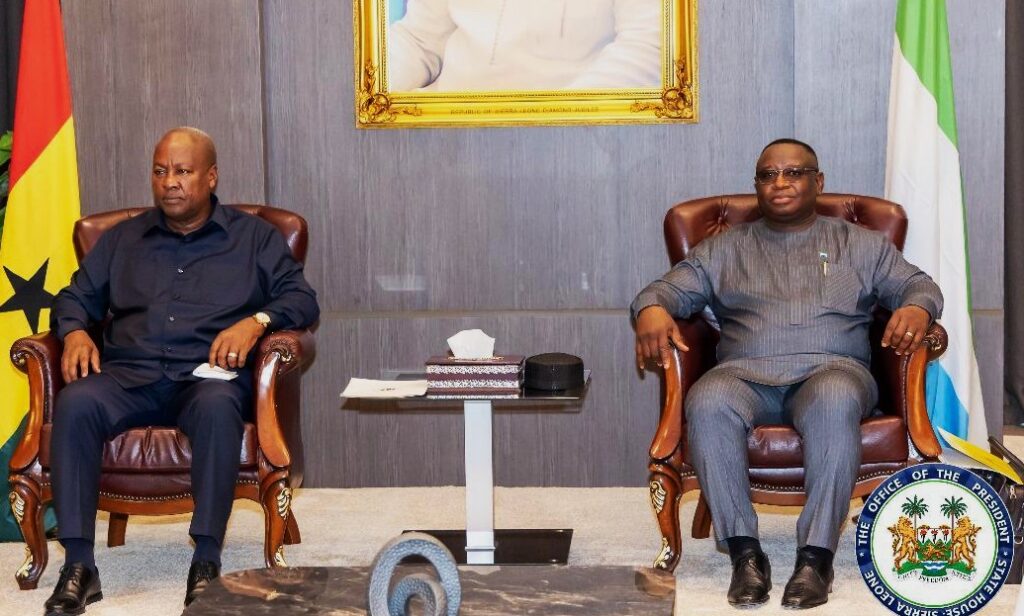
Relations Turn Sour; Mahama Distances Ghana from Bio, Amid Seizure of Drugs in France from Sierra Leone, Via Ghana; Restoring Democracy is a Must
15 September 2026