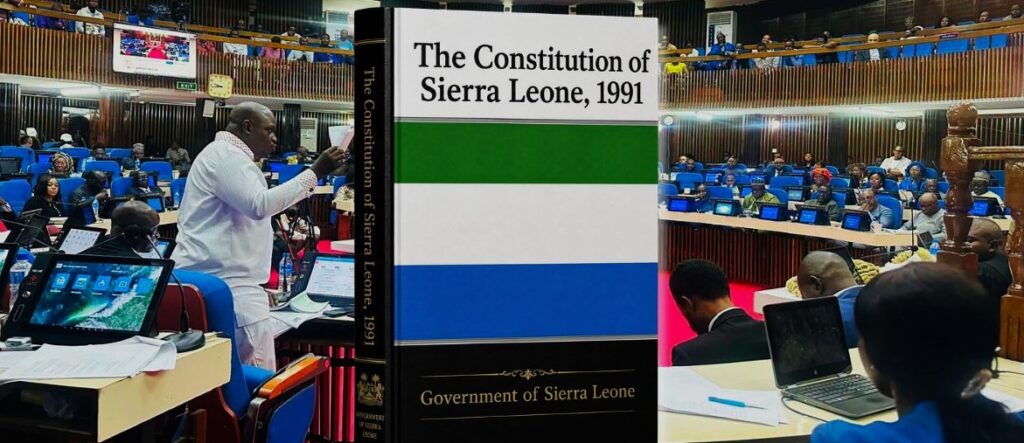
SLAM-Global Thinks Citizenship Must Never be a Source of Political Division, But a Foundation for National Unity, Democratic Legitimacy & Prosperity
Quick Summary
Sierra Leone Advocacy Movement SLAM-Global thinks citizenship must never become a source of political division, but a foundation for national unity.
PRESS STATEMENT: CITIZENSHIP MUST UNITE THE NATION, NOT DIVIDE IT – August 8, 2026
The Sierra Leone Advocacy Movement–Global (SLAM-GLOBAL), speaking on behalf of the ordinary people of Sierra Leone, believes that citizenship must never become a source of political division, but a foundation for national unity, democratic legitimacy, and shared prosperity. As Parliament debates proposed amendments to the nation’s citizenship laws, we urge every Sierra Leonean to look beyond political rhetoric, partisan interests, and legal technicalities.
The fundamental question is not simply who may become a citizen, but what kind of nation our citizenship laws are intended to build. To help guide this national conversation, SLAM-GLOBAL introduces The Citizenship Test—a principled framework grounded in constitutional governance, democratic accountability, public administration, implementation science, and the lived experiences of ordinary citizens. Rather than judging citizenship reforms by speeches, parliamentary debates, or political advantage, these tests ask a more important question:
Will these reforms strengthen national unity, protect equal citizenship, expand opportunity, and improve the daily lives of the Sierra Leonean people? The framework includes The Ordinary Citizen’s Test, The Patriot’s Test, The Constitutional Test, The Nation-Building Test, The Children’s Test, and ultimately The People’s Verdict. Together, they encourage Sierra Leoneans to evaluate citizenship reform not by promises or activities alone, but by measurable outcomes that promote justice, unity, economic opportunity, and the long-term national interest. Citizenship is more than a legal status or a constitutional provision.
It is a covenant between the individual and the Republic—a shared commitment to one nation, one people, and one future. Any reform worthy of becoming part of Sierra Leone’s Constitution must therefore unite the nation, strengthen democratic institutions, and leave future generations with a stronger, more inclusive Sierra Leone than the one we inherited. 2 In mid-2026 Parliament was reviewing a package of constitutional amendments affecting citizenship. (We assume there is a draft Bill on the table). The precise details are under discussion, but we know the debate has touched on ancestry, dual nationality, and voting rights for Sierra Leoneans abroad.
Sierra Leone’s citizenship framework is set by the 1991 Constitution and the Citizenship Act (1973, as amended 2006 and 2017). Importantly, any change to citizenship law requires a two-thirds majority in Parliament. Under current law, citizenship by birth still requires at least one parent “of Negro‑African descent”. In practice this has meant that non-African minorities (for example Sierra Leone’s Lebanese and Indian communities) have historically faced obstacles to full citizenship.
Meanwhile, the question of dual citizens holding office has been contentious. For decades, dual citizens were disqualified from Parliament. (In 2021 the government signaled it would amend this restriction). Across these issues, ordinary Sierra Leoneans worry: does this reform meaningfully improve their lives? Citizens want to know whether children’s schools will get better, whether jobs will grow, whether clinics will function, whether the economy will recover, and whether government will be more accountable. They are less concerned with which party or tribe gains an advantage. (Photo: Parliament).

As one recent analysis observes, “in principle” Sierra Leone’s laws provide citizenship to all residents, but “de facto…non-African minority groups…face discrimination”. The real litmus test is whether proposals strengthen unity and welfare or deepen divisions. The Citizenship Test: SLAM-GLOBAL proposes that every citizenship proposal be evaluated by a suite of tests that reflect citizens’ questions and constitutional values. Each test is a way of thinking that ordinary Sierra Leoneans will understand. The Ordinary Citizen’s Test: What matters to the average person?
Citizens won’t be asking “Who gets citizenship?” first. They will ask, “Will this make my life better?” Key questions include: • Jobs: Does the reform create work for our youth? • Food: Will I be able to afford staples like rice? • Education: Will schools improve so children can learn? Health: Will clinics have medicines and staff? • Security: Will streets and borders be safer? • Trust: Will courts and elections reflect fairness? If a citizenship amendment cannot clearly improve outcomes on these fronts, it fails this test. In other words, if “governments celebrate meetings held” but citizens cannot “afford rice” or find work, the policy is not working.
Citizens measure success by results (outcomes), not by inputs or rhetoric. The Patriot’s Test: An honest patriot asks, “How does this help Sierra Leone as a whole?” Not “How does it help my party or clan?” Any citizenship proposal must bind all Sierra Leoneans together. If a change is primarily political or ethnic payback, it fails. Citizenship should be an instrument of national unity and growth – not a weapon of division. The Constitutional Test: The Sierra Leone Constitution is a pact with the people. Chapter II declares sovereignty belongs to the people, and “the security, peace and welfare of the people…shall be the primary purpose of Government”.
The Constitution’s motto is “Unity Freedom and Justice,” and it explicitly requires the State to “promote national integration and unity” and to discourage discrimination by origin, birth, or ethnicity. Every amendment should ask: Does this keep the constitutional promise? In plain language: • Democracy: Does it strengthen free elections and equal rights? • Unity: Does it bring people together, or favor one group over others? • Equality: Does it treat every citizen the same under the law? • Welfare: Will it advance the people’s welfare and justice? If the answer is no, back to the drawing board.
The Constitution exists to protect Sierra Leoneans, not special interests. The Nation-Building Test: Public administration and implementation science remind us that governments have three tasks: formulate policy, implement policy, and deliver public value. True success is never measured by intent or law alone, but by what citizens actually experience. Leaders can hold conferences, pass bills, or send press releases – but nation-building is measured in hospitals built, markets opened, and children fed. Under this test, we judge citizenship reform by real impacts.
For example: Will it attract investment and jobs? Will it strengthen institutions that endure beyond any one government? A strong nation builds strong institutions, not just personalities. Will it encourage innovation, trade, and cross-border partnerships? If constitutional changes do not translate into more jobs, better schools, trusted courts, and lower corruption, then they have failed the Nation-Building Test. In implementation terms, intentions and budgets do not feed children – only delivery does. The Children’s Test: Think long-term. Imagine explaining today’s citizenship debate to a child born now: Will this child say in 50 years, “Our leaders united Sierra Leone for my future”, or “They left us more divided”?
Every amendment leaves an inheritance for the next generation. Citizenship should be a proud gift to our children – one that says, “We are one people, moving together forward.” Anything less fails the Children’s Test. The People’s Verdict: In the end, ordinary people speak plainly. This test is framed as a conversation: Government: “We held national conferences and formed committees to review the law.” Citizens: “What changed? Can my family afford rice now? Are there more jobs in the village?” Government: “We have amended the Constitution.” Citizens: “Did our schools improve? Are hospitals stocked with medicine? Where are the results for Sierra Leone?” This back-and-forth cuts to the heart of the issue. Citizens don’t want endless debates – they want to ask, “Does Sierra Leone win?”
If leaders answer only with process (“We debated, we issued statements”), the people will counter, “What did you deliver?” This rhythm – short, pointed questions with plain answers – is powerful on radio and social media. It forces accountability: in the end, “citizenship must unite the nation, not divide it.” The People’s Test is simple: Governments often judge themselves by what they announce. The people judge them by what they deliver. Meetings alone do not feed families. Press conferences alone do not create jobs. Committees alone do not educate children. Policy documents alone do not treat patients. Citizens measure leadership not by the volume of promises made, but by the tangible improvements they experience in their daily lives.
That is the standard by which every government—and every constitutional reform—should ultimately be judged. Recommendations and Call to Action Based on these principles, SLAM-GLOBAL offers these concrete recommendations: • Focus on Unity and Outcomes: Any citizenship amendment must explicitly uphold equality and national unity. Assess proposed changes against the Citizenship Test questions above before approval. Do not let amendments become tools of political advantage. • Require Impact Assessment: Before voting, Parliament should commission a public impact study: how will this change affect jobs, investment, social cohesion, and the economy? • Strengthen Transparency: Debates on citizenship should be public and inclusive. (Photo: SLAM boss Dr Venod Fullah).

Political parties and civil society must commit to non-partisan dialogue. The final text of any amendment should be clearly communicated in plain language and followed by regular progress reports on outcomes. • Civil Society Vigilance: NGOs, the press, and citizens should track the People’s Scorecard indicators and demand accountability. If promised benefits do not materialize, parliamentarians and the executives must be held to account. • Protect Children’s Inheritance: Embed in law that citizenship reforms require a referendum or supermajority, given their long-term impact.
This encourages broader consensus and trust that changes truly serve the nation. Call to Action: Sierra Leoneans – ask your leaders to pass the Citizenship Test. Before any amendment is adopted, demand to know “Does this unite our nation?” We urge all citizens to discuss these questions at home and in the media. Parliamentarians and officials should listen: the days when governance was judged by speeches are over. The people now ask for progress. Citizenship is a bond of our shared destiny – let it build bridges, not barriers.
P.S. We invite you to explore our recently published analysis in a book, “Building a Nation: Good Governance and Democratic Principles in Sierra Leone.” As we unite for change in 2026, this resource provides valuable insights for activists, policymakers, and concerned citizens committed to Sierra Leone’s transformation. Find it here: link.
Signed, Dr. Alfred A. Veenod Fullah, DIRECTOR-GENERAL
CC:
Office of the President of Sierra Leone
- Office of the Vice President of Sierra Leone
- Secretariat of the All People’s Congress Party 2
- Speaker of the Sierra Leone House of Parliament
- Office of the Chief Minister of the Government of Sierra Leone
- Electoral Commission for Sierra Leone (ECSL)
- Inspector General of Sierra Leone Police
- Chief of Defence Staff, Republic of Sierra Leone Armed Forces (RSLAF)
- Office of National Security, Sierra Leone
- Independent Commission for Peace and National Cohesion
- Leonardo Santos Simao, Representative of the Secretary-General & Head of UN Office for West Africa and the Sahel (UNOWAS)
- African Union (AU)
- Economic Community of West African States (ECOWAS)
- Amnesty International
- Marco Rubio, United States Secretary of State
- Vice President, Congressional and Public Affairs
- The Commonwealth Secretary-General
- Karim Ahmad Khan, Chief Prosecutor, International Criminal Court (ICC)
- Richard YOUNG, Chief de Division, Afrique de l’Ouest
- Ms. Ursula Von Der Lyen, European Commissioner
- The United Nations Representative in Sierra Leone
- H. E. Oumar Touray, President of ECOWAS Commission
- Madam Fatoumata Jallow-Tambajang, former VP of The Gambia
- H.E John Dramani Mahama, President of Ghana
- H. E. Bassiru Faye, President of Senegal
- H.E. Mamadi Doumbouya, President of Guinea
- H.E. Joseph Boakai, President of Liberia
- David Lammy, Secretary of State for Foreign, Commonwealth & Dev Affairs, UK
- Neil Alan John Coyle, MP for Bermondsey & Old Southwark, UK
- Ambassador Aly Diallo, Ambassador of the Republic of Guinea to the UK&I
- Ambassador Mohammad Maidugu, Acting High Commissioner of Nigeria in the UK&I
- Her Excellency Dr Fatou Bensouda, Head of Mission, The Gambia high Commission, UK&I
- H.E Fatimata Dia, Ambassador of Senegal to the UK&I
- H.E Gurly T. Gibson-Schwarz, Ambassador of Liberia to the UK&I
- Her Excellency Josephine Gauld, British High Commissioner to Sierra Leone
- Ambassador of the United States of America to Sierra Leone
- Head of the European Union Delegation in Sierra Leone
- General Consul of Canada in Sierra Leone
- Ambassador of China to Sierra Leone
- Ambassador of Germany to Sierra Leone
- Ambassador of Lebanon to Sierra Leone
- Ambassador of Iran to Sierra Leone
- Ambassador of Brazil to Sierra Leone
- Ambassador of Sweden to Sierra Leone
- Ambassador of Libya to Sierra Leone
- Ambassador of Egypt to Sierra Leone
- Ambassador of Cuba to Sierra Leone
- Ambassador of Guinea to Sierra Leone
- Ambassador of Liberia to Sierra Leone
- High Commissioner of the Federal Republic of Nigeria to Sierra Leone
- High Commissioner of Ghana to Sierra Leone
- High Commissioner of The Gambia to Sierra Leone
- General Consul of Italy in Sierra Leone
- Honorary Consul-General of the Islamic Republic of Pakistan in Sierra Leone
- Honorary Consul-General of Ireland in Sierra Leone
- Honorary Consul-General of Japan in Sierra Leone
- Honorary Consul-General of India to Sierra Leone
- Honorary Consul of Senegal in Sierra Leone
- Honorary Consul of Switzerland in Sierra Leone
- Honorary Consul of Syria in Sierra Leone
- Honorary Consul of Turkey in Sierra Leone
- Honorary Consul of Mali in Sierra Leone
- Honorary Consul of Ukraine in Sierra Leone
- Honorary Consul of Romania in Sierra Leone
- Honorary Consul of Norway in Sierra Leone
- Honorary Consul of Hungary in Sierra Leone
- Honorary Consul of France in Sierra Leone
- Honorary Consul of Belgium in Sierra Leone
- Honorary Consul of The Netherlands in Sierra Leone
- Honorary Consul of Spain in Sierra Leone
- Honorary Consul of Serbia in Sierra Leone
- Honorary Consul of Austria in Sierra Leone
- Honorary Consul of Denmark in Sierra Leone Honorary Consul of Russia in Sierra Leone
- Honorary Consul of Malaysia in Sierra Leone
- Honorary Consul of South Africa in Sierra Leone
- Civil Society Movement – Sierra Leone (CSM – SL)
- Media Reform Coordinating Group of Sierra Leone (MRCG)
- Sierra Leone Association of Non-Governmental Organizations (SLANGO)
- Civil rights Defenders – Sierra Leone
- National Elections Watch (NEW) – Sierra Leone
- Campaign for Good Governance (CGG) – Sierra Leone
- Women’s Forum – Sierra Leone
- Network Movement for Justice and Development (NMJD)
- Sierra Leone Legal Aid Board
- Faith-Based and Interfaith Organizations – (Interreligious Council of Sierra Leone)
- Council of Churches in Sierra Leone (CCSL)
- Fourah Bay College – University of Sierra Leone
- Institute of Governance Reform (IGR)
- Youth Partnership for Peace and Development (YPPD)
- Children’s Forum Network
- Anti-Corruption Commission (ACC) – Sierra Leone
- Awoko Newspaper – Sierra Leone
- Liberty TV Online – Sierra Leone
- Radio Democracy 98.1 FM Station – Sierra Leone
- The New York Times
- The Washington Post
- The USA Today
- The Cable News Network (CNN)
- The MicroSoft National Broadcast Corporation (MSNBC) The Fox News
- The Associated Press
- Thomson Reuters
- The National Public Radio (NPR)
- The Brookings Institution
- The Heritage Foundation
- The Center For American Progress
- The National Association For The Advancement Of Colored People (NAACP)
- The American Civil Liberties Union (ACLU)
- The MoveOn
- The Democratic National Committee
- The Republican National Committee
- The EMILY’s List
- The British Broadcasting Corporation (BBC)
- The Sky News
- Al Jazeera
- The Independent Television (ITV)
- The Times
- The Financial Times
- The Guardian
- The Daily Telegraph
Sierra Leone Advocacy Movement (SLAM-Global) Motto: Trust, Unity and Social Justice Email: advocacy1@slam-global.org.uk Mobile: UK – +447725982424/+447564115946 EU – +46734836874/+34676768005 US – 01732-619-9510/01608-772-3917

Editorial
6 September 2026
UN Appearance Means Zero; The Bios’ Illegality Remains at the UN; Brutes Like Gaddafi Spoke at the UN; Next Minute He was Killed; Sierra Leoneans, Don’t Worry
6 September 2026
Commentary
6 September 2026
Marathon Race Ends Soon: New ECOWAS President General Diop from Senegal Takes Over from Gambian Traitor Touray; Real Work Began Yesterday
6 September 2026
Other News
17 September 2026
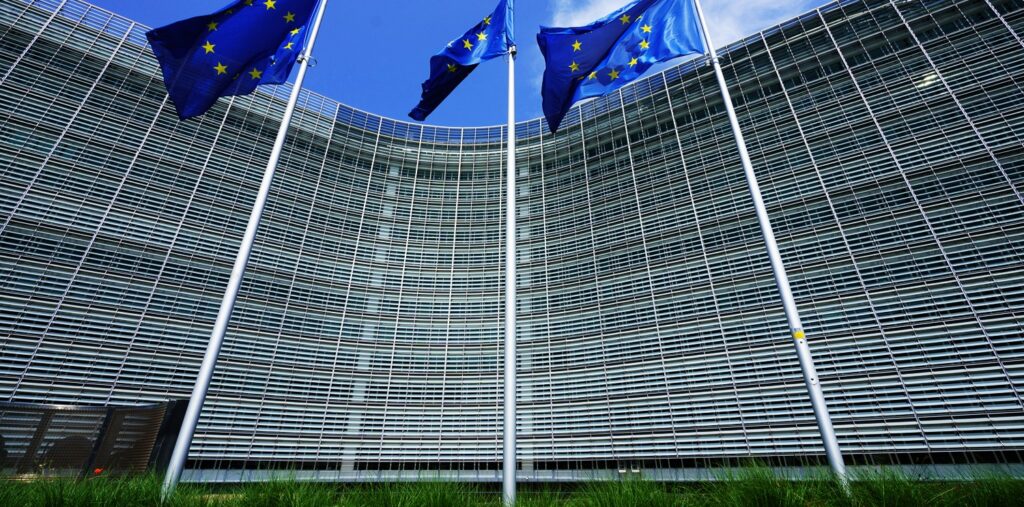
Judgement Today for Illegal Bio as EU Parliament Votes Sanctions & Travel Ban on SLPP/APC Top Officials for Aiding Bolle Jos; Restoration is the Only Answer
16 September 2026
Lamarana, Show Some Class; To Hear You Say ‘2023 Result is on ECSL Website’ is Shameful; Kemoh Tried to School You, But Ignorance or Pretence Clouds You
15 September 2026
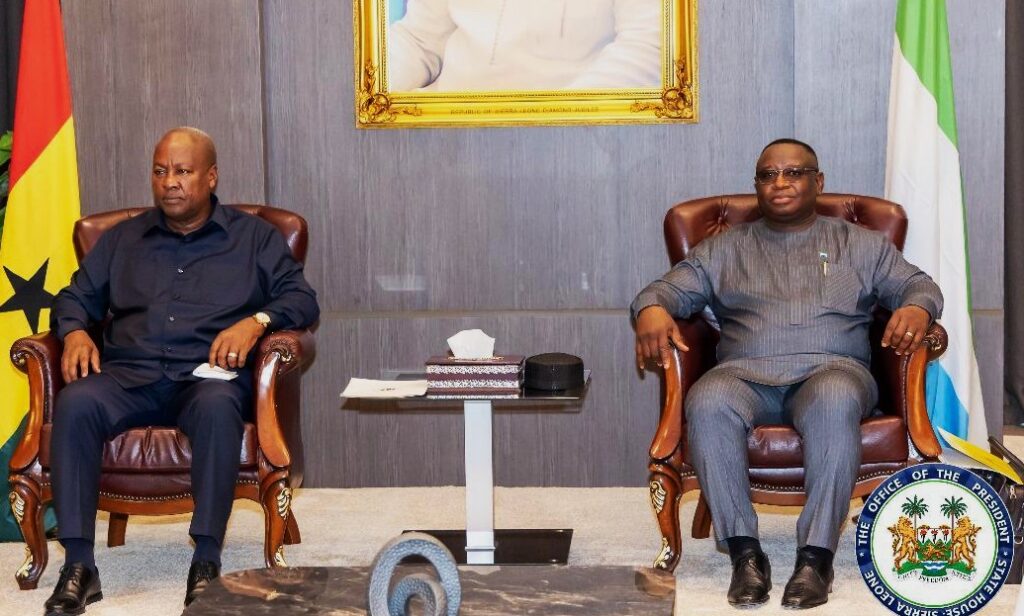
Relations Turn Sour; Mahama Distances Ghana from Bio, Amid Seizure of Drugs in France from Sierra Leone, Via Ghana; Restoring Democracy is a Must
15 September 2026