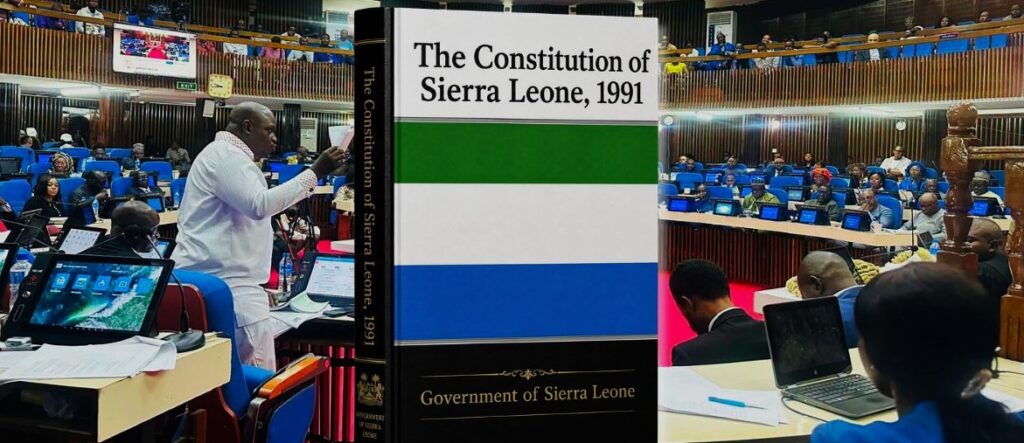
SLAM-Global Raises Fundamental Questions Before Parliament Proceeds Further with the Constitution of Sierra Leone (Amendment) Bill
Quick Summary
SLAM/Global has asked this question: Who gave you the power to change our Constitution without first showing the people that the Constitution itself has been obeyed?
Who Gave You the Power? Before You Change Our Constitution, Show Sierra Leoneans the Law, the Votes and the People’s Mandate – Press Statement August 22th, 2026
SLAM-Global raises a fundamental question before Parliament proceeds any further with the Constitution of Sierra Leone (Amendment) Bill: Who gave you the power to change our Constitution without first showing the people that the Constitution itself has been obeyed? The disputed parliamentary vote of August 10, 2026 demands an answer. Of Sierra Leone’s 149 Members of Parliament, only 96 reportedly voted in favor—fewer than the 100 votes required to constitute two-thirds of the full membership.
If the provisions at issue fall under Section 108(2)(b) of the 1991 Constitution, that arithmetic is not a technicality. It goes to the constitutional validity of the process itself. Yet Sierra Leoneans are being asked to accept sweeping claims about ―decades of national dialogue, public consultation, electoral reform, proportional representation, and gender inclusion without being shown, clause by clause, where these proposals came from, what the people actually endorsed, what constitutional procedure governs them, and whether the required parliamentary votes were obtained.
Assertions of parliamentary majority or privilege cannot answer a constitutional question if the supreme law requires a higher threshold. 2 SLAM-GLOBAL therefore asks for something neither partisan nor unreasonable: Show us the law. Show us the votes. Show us the consultation records. Show us the people’s mandate. Until those questions are answered transparently, SLAM-Global calls for publication of the relevant official records and gazettes, disclosure of the provenance of each major amendment, independent scrutiny of the consultation record, meaningful public hearings, and—where constitutional interpretation remains disputed—judicial review before irreversible enactment.
This is bigger than SLPP. It is bigger than APC. It is bigger than ―President‖ Bio, Speaker Thomas, or any individual politician. The Constitution belongs to the people of Sierra Leone. Those who exercise power under it must first prove that they are exercising that power within it. This is no longer merely Government versus APC. Independent legal voices—including the Lawyers’ Society, ILRAJ, and practicing barristers—have raised serious constitutional questions. When lawyers, Parliament and political leaders disagree over the meaning of the supreme law, the answer must come from the Constitution and, where necessary, its lawful judicial interpretation—not political convenience.
SLAM-Global’s Position and Demands – · Strictly Enforce the 2/3 Requirement: Section 108(2)(b) of the 1991 Constitution requires at least ―two-thirds of the Members of Parliament‖ in favor of any amendment. With 149 MPs total, this means 100 affirmative votes were needed; 96 votes fell short. We insist the vote must be repeated or confirmed under the proper threshold. · Public Disclosure of Gazette and Vote Records: The Constitution mandates two gazette publications of the Bill (with ≥9 days between). SLAM-Global demands the Government release copies of both gazette notices (the Clerk of Parliament has claimed this was done).
We also call for disclosure of the official vote tally and counting procedure to verify the 96 vs. 100 count. · Clause-by-Clause Provenance: We demand a transparent table linking each amendment clause to its origin (Tripartite or CRC recommendation, party submission, consultation outcome, etc.) and to any public input. Citizens must see which provisions were vetted in consultations and where gaps remain. · Immediate Supreme Court Review: The Speaker referred the threshold question to the Supreme Court only after announcing the Bill passed. SLAM-Global insists the Court should have been consulted before any vote, as ILRAJ recommended.
We call on the Court to expedite its review of the constitutional issues, and for Parliament to suspend further action until a definitive ruling. Transparent Public Hearings: We urge Parliament to hold open, clause-by-clause hearings on the Bill text. All stakeholders – including ordinary citizens, civil society, and the press – should be invited to present evidence before any final decision. The removal of observers on August 10 (reportedly for a mysterious ―security threat) undermines trust. We demand a full account of that incident and that no meeting on this vital issue be held behind closed doors.
- Audit of Consultations: SLAM-Global calls for public release of all consultation data: agendas, attendance lists, minutes, and expert analyses. The 2025 regional dialogues (see below) were conducted by the Tripartite Secretariat, but it remains unclear how their input was integrated. An independent audit of those records (Tripartite report, NGO and government notes) should be commissioned. Constitutional Requirements and Factual Context · Section 108’s Text: Article 108(2)(b) is unambiguous: any constitutional amendment bill ―shall be supported at its Second and Third Readings by the votes of not less than two-thirds of the Members of Parliament.
There is no clause in the Constitution that exempts a non-entrenched amendment from this rule. By contrast, Section 91 allows a simple majority on ordinary questions, but Section 108 is a specific exception requiring two-thirds. SLAM-Global stresses that the Constitution itself supersedes any contrary procedure. · Speaker’s Certificate and Immunity: Section 108(6) says the Speaker’s certification of compliance with procedural rules is ―conclusive‖ and not subject to court inquiry. However, this only covers formalities like gazetting and voting steps, not the substance of those rules. Importantly, Section 94(2) immunizes Parliament’s procedural decisions from judicial review, but this cannot override the Constitution’s text.
If a process plainly violates Section 108(2)(b), SLAM-Global contends that courts must be able to enforce the Constitution. · The Vote Tally: Parliament has 149 seats. Two-thirds of 149 is 99.33, so 100 votes are needed. Reports and the APC’s statement confirm that only 96 MPs voted for the Bill. Even if all absent MPs had voted yes (which they did not), the threshold was not met. No legal source justifies treating ―two-thirds‖ as ―two thirds of those present‖ except for certain impeachment clauses. In the Auditor-General case (Taylor-Pearce removal), the Speaker himself had ruled in favor of counting all Members. SLAM-Global notes this stark inconsistency: either the Constitution means two-thirds of all Members or it means nothing.
- Gazette Publication: The Clerk of Parliament told the Tripartite Secretariat on June 3, 2026, that gazetted copies have been distributed to MPs. SLAMGLOBAL will verify compliance by seeking those gazettes. If they were indeed published twice (with ≥9 days apart), that part of Section 108 was satisfied. Any claim that gazetting was ignored is refuted by the Clerk’s account. Mischaracterizations by Leaders SLAM-Global has catalogued key public claims and the facts: · ―President‖ Bio: In his August 9 speech, the ―President‖ called the Amendment Bill ―historic‖ and said it ―represents the culmination of decades of national dialogue‖ on democracy. He also praised its introduction of proportional representation ―to broaden participation‖ and a ―minimum 30% quota for women.
In reality, the Tripartite process (Rec.78) only mandated a nationwide dialogue on the electoral system. Those 2025 meetings did not produce a clear choice of PR – on the contrary, regional sessions in Port Loko and Makeni saw majorities favoring FPTP with some PR elements. No consultation asked citizens to approve the entire Amendment Bill’s text. Bio’s portrayal of ―decades of dialogue‖ conflates limited studies of PR vs FPTP with blanket consent. His emphasis on PR and quotas frames them as popular demands, but SLAM-GLOBAL emphasizes that every reform must follow constitutional process, not be justified by rhetoric.
- Speaker Segepoh Thomas: In public remarks (later reported in Sierra Leone media), the Speaker ruled that because none of the Bill’s provisions appear in Section 108(3), they are not ―entrenched‖ and thus require only a simple majority. He further invoked Section 94(2) to suggest his procedural ruling cannot be questioned by courts. SLAM-Global notes two problems: (1) The Constitution’s plain text in 108(2)(b) makes no such exception for ―non-entrenched‖ clauses. There is no carve-out that most amendments can ignore two-thirds. (2) Section 94(2) protects internal procedural rules, but voting thresholds for a constitutional amendment are substantive requirements, not mere scheduling. Reliance on Section 94(2) cannot nullify the clear mandate of 108(2)(b).
Moreover, the Speaker’s own words refer the question to the Supreme Court as one of ―grave public interest‖ – effectively acknowledging uncertainty. SLAM-Global asserts the Speaker’s flip from the strict view taken in the Taylor-Pearce case to a lax interpretation now is inconsistent with the rule of law. · APC Opposition: The All People’s Congress has consistently insisted the Constitution required 100 votes and that 96 was insufficient. They cited Section 108(2)(b) and the Standing Orders. Those constitutional and parliamentary rules 5 indeed support their stance. (Standing Order 44(3) echoes the 2/3 rule for constitutional changes.) SLAM-Global agrees with the APC on the math. However, we urge precision: for example, APC leaders spoke of being ―lectured on the law‖ and said no process could validate the flawed vote.
Legally, the vote stands challenged but not voided until resolved by the Court. We caution against absolutist statements (e.g. that ―no amendment is valid while threshold is disputed‖) that could unsettle institutions – the remedy is judicial clarification. APC did highlight correctly that ―no government, Speaker, or Parliament stands above the Constitution‖, a principle SLAM-Global fully supports. Consultations and Public Input The Tripartite Steering Committee (TSC) carried out the mandated consultations on the electoral system (Recommendation 78). These included: · June 18–21, 2025 (Freetown): A series of stakeholder dialogues at Brookfields and Country Lodge with the ECSL and security chiefs, political party leaders, academics, and civil society.
Participants discussed pros and cons of FPTP vs PR. (An expert panel discussion on June 21 stressed national dialogue and inclusion of women/youth.) · June 23, 2025 (Port Loko – North-West): Regional public meeting (Karene, Kambia, Port Loko districts) attended by local councilors, youth, religious and women’s leaders. Output: A majority recommended retaining FPTP for its simplicity and accountability, while suggesting PR elements (e.g. a small 5% threshold). · June 25, 2025 (Makeni – North-East): Regional meeting (Falaba, Tonkolili, Koinadugu, Bombali) with diverse stakeholders. Feedback: The room was ―sharply divided‖ on PR vs FPTP, but most favored FPTP for local accountability; they did endorse PR fairness features (like a 5–7% threshold, and quotas).
- June 27, 2025 (Kenema – Eastern): Regional meeting (Kono, Kailahun, Kenema, etc.) with community reps. (Detailed report unavailable, but follow-up comments noted similar debates on inclusivity vs simplicity.) · June 28, 2025 (Bo – Southern): Regional meeting (Bo, Moyamba, Bonthe, Pujehun) with ~100 participants (teachers, students, councilors, disability and women’s groups). Discussion highlights emphasized accountability under FPTP and inclusion under PR (e.g. open lists, low thresholds). A ―significantly lower‖ PR threshold (~5%) was recommended to ensure smaller parties and marginalized groups could win seats. · June 30, 2025 (Waterloo – Western Rural): Meeting in Waterloo with pastors, youth leaders, PWD advocates, etc.
Participants reviewed examples (Germany, Kenya) and noted that hybrid systems might merge the ―positives of both‖ FPTP and PR. No consensus was recorded; the emphasis was on thinking creatively for inclusion. July 17, 2025 (Freetown – National Conference): A ―climax‖ national dialogue at Bintumani Conference Hall with ~350 delegates from all 16 districts. Ministers, EMB heads, CSOs and media joined in. The final report says the conference reaffirmed that any chosen system must promote representation of women, youth and PWDs. Summary: It reviewed the regional feedback (mostly favoring FPTP with PR features) and urged ―national interest above partisan interests.
Consultation Record The nationwide consultations held between June and July 2025 brought together electoral officials, political parties, civil society, traditional and religious leaders, women, youth, persons with disabilities, academics, and community representatives across Sierra Leone. The record, however, does not demonstrate a clear national consensus for replacing First-Past-the-Post (FPTP) with permanent proportional representation (PR). In Port Loko, participants favored retaining FPTP while considering a limited PR mechanism; in Makeni, views were sharply divided, with a majority favoring FPTP; and discussions in Kenema, Bo, and Waterloo reflected similarly mixed positions, including interest in hybrid approaches.
The July 17 national validation meeting at Bintumani affirmed broad principles—greater inclusion of women, youth and persons with disabilities, national cohesion, and stronger representation—but did not amount to clause-by-clause approval of the eventual Amendment Bill. The distinction is critical: consultation is not consent, and discussion is not constitutional authorization. These meetings explored electoral systems and reform options; they did not establish unanimous public support for permanent PR, nor did participants publicly examine and approve the final amendment text clause by clause. Therefore, claims that the present Bill simply embodies a settled national consensus should be tested against the actual consultation record.
The people must be shown exactly what was proposed, what they supported, and how their views became the provisions now before Parliament. Identified Mischaracterizations · ―Culmination of Dialogue‖: The President’s claim that the Amendment Bill reflects the will of ―decades of national dialogue‖ is misleading. In fact, the only nationwide dialogue was in mid-2025 on the electoral system, not on all proposed constitutional changes. Nor did those meetings compel a switch to PR; several regions voted to keep FPTP. Treating the Tripartite discussions as blanket mandate for these amendments distorts their scope. · Electoral Reform Framed as Consensus: Bio asserted the Bill ―broadens participation‖ by adding PR and a 30% women quota. While SLAM-GLOBAL supports inclusionary reforms, it notes that these provisions came from different sources (the 30% quota echoes past CRC suggestions, and PR was one option studied in 2025).
Presenting PR as the definitive public choice ignores the clearly mixed preferences. In short, good reforms cannot override strict process: constitutional checks can’t be bypassed with rhetorical appeal. 7 · ―Only Majority Needed‖: The Speaker’s position – that only a simple majority under Section 91 applies – conflicts with the text of Section 108(2)(b). Constitution drafters made no exception for amendments beyond those in 108(3). The Speaker’s invocation of Section 94(2) immunity does not change the requirement. SLAM-GLOBAL points out that earlier, the Speaker himself treated ―two-thirds of all Members‖ as binding in another case. A blanket 51% rule for amendments has no basis in law, yet it was applied to curve the outcome. · ―No One Above Constitution: The APC’s refrain is correct – ―no Government, party, Speaker or Parliament stands above the Constitution.
SLAM-Global echoes this, but also cautions: calling for strict compliance must itself comply with procedure. For example, APC MPs walked out to protest, insisting they couldn’t participate in a flawed vote. While principled, this tactic effectively left fewer MPs voting, which the Speaker then counted as a majority. Legally, the remedy is not to abandon the chamber but to demand that the sitting meets constitutional norms. The Speaker should have paused the process and reconvened Parliament only once the Supreme Court clarified the threshold issue. SLAM-Global’s Demands and Remedies 1.
Immediate Halt to Enactment: Parliament must not submit the Bill to the President or make any final determination until the constitutional doubts are settled. SLAM-Global demands that the Speaker and President acknowledge that the two-thirds requirement is in serious question. 2. Full Court Review: The threshold dispute should be adjudicated before any assent. The Supreme Court’s opinion is now officially invited, and SLAM-GLOBAL insists it be rendered promptly. In the interim, the current parliamentary outcome must be treated as provisional. 3. Publish Official Gazettes: To verify compliance with Section 108(2)(a), all gazette issues containing the Bill must be made public.
Even if the Clerk claims distribution, ordinary citizens have a right to see these publications. 4. Clause Provenance Table: We call on lawmakers to prepare a detailed clauseby-clause table. For each amendment (e.g. altering Section 76A, or adding a list system), the table should cite its source – whether a Tripartite recommendation, CRC finding, party policy or public submission – and note where (if at all) it was discussed in consultations. This transparency tool will expose which parts of the Bill are well-grounded versus speculative. 5. Transparent Hearings: Rather than a rushed parliamentary vote, SLAM-Global urges open public hearings in Parliament. Each clause should be debated in committee with expert testimony. Civil society and ordinary citizens should be invited to question legislators.
This process was bypassed on August 10, but it is indispensable for legitimacy. 6. Consultation Data Audit: The TSC and government should release all records from the 2025 dialogue (agendas, participant lists, written submissions). An independent commission could review whether the Bill’s substance genuinely reflects public input. Where there is a gap (for example, lowering the presidency threshold from 55% to 50%+1 was never a major public demand), this should be highlighted as an oversight. 7. Reaffirmation of Rule of Law: SLAM-Global demands that all officials — the President, Speaker, and party leaders — publicly restate their commitment to ―the supremacy of the Constitution‖.
Any future parliamentary action on this Bill must be clearly grounded in the written law, not in slogans. Call to Action Fellow Sierra Leoneans and friends of democracy: the integrity of our Constitution is at stake. Our leaders may try to paper over these issues with rhetoric, but the people must insist on truth and law. We urge every citizen to demand transparency. Write to your MP, participate in peaceful rallies, and share this press release. We also call on international partners (diplomats, development agencies, and media) to scrutinize this process. As one Sierra Leonean MP put it after the Auditor-General saga, ―We failed you…
Democracy is not given; it is earned and protected by the vigilance of its citizens. Now is that moment. Remember: no vote, no speech, no statute stands above the Constitution. Let us unite to uphold our law before it’s too late. P.S. We invite you to explore our recently published analysis in a book, “Building a Nation: Good Governance and Democratic Principles in Sierra Leone.” As we unite for change in 2026, this resource provides valuable insights for activists, policymakers, and concerned citizens committed to Sierra Leone’s transformation. Find it here: link.
Signed, Dr. Alfred A. Veenod Fullah, DIRECTOR-GENERAL
CC:
Office of the President of Sierra Leone
- Office of the Vice President of Sierra Leone
- Secretariat of the All People’s Congress Party 2
- Speaker of the Sierra Leone House of Parliament
- Office of the Chief Minister of the Government of Sierra Leone
- Electoral Commission for Sierra Leone (ECSL)
- Inspector General of Sierra Leone Police
- Chief of Defence Staff, Republic of Sierra Leone Armed Forces (RSLAF)
- Office of National Security, Sierra Leone
- Independent Commission for Peace and National Cohesion
- Leonardo Santos Simao, Representative of the Secretary-General & Head of UN Office for West Africa and the Sahel (UNOWAS)
- African Union (AU)
- Economic Community of West African States (ECOWAS)
- Amnesty International
- Marco Rubio, United States Secretary of State
- Vice President, Congressional and Public Affairs
- The Commonwealth Secretary-General
- Karim Ahmad Khan, Chief Prosecutor, International Criminal Court (ICC)
- Richard YOUNG, Chief de Division, Afrique de l’Ouest
- Ms. Ursula Von Der Lyen, European Commissioner
- The United Nations Representative in Sierra Leone
- H. E. Oumar Touray, President of ECOWAS Commission
- Madam Fatoumata Jallow-Tambajang, former VP of The Gambia
- H.E John Dramani Mahama, President of Ghana
- H. E. Bassiru Faye, President of Senegal
- H.E. Mamadi Doumbouya, President of Guinea
- H.E. Joseph Boakai, President of Liberia
- David Lammy, Secretary of State for Foreign, Commonwealth & Dev Affairs, UK
- Neil Alan John Coyle, MP for Bermondsey & Old Southwark, UK
- Ambassador Aly Diallo, Ambassador of the Republic of Guinea to the UK&I
- Ambassador Mohammad Maidugu, Acting High Commissioner of Nigeria in the UK&I
- Her Excellency Dr Fatou Bensouda, Head of Mission, The Gambia high Commission, UK&I
- H.E Fatimata Dia, Ambassador of Senegal to the UK&I
- H.E Gurly T. Gibson-Schwarz, Ambassador of Liberia to the UK&I
- Her Excellency Josephine Gauld, British High Commissioner to Sierra Leone
- Ambassador of the United States of America to Sierra Leone
- Head of the European Union Delegation in Sierra Leone
- General Consul of Canada in Sierra Leone
- Ambassador of China to Sierra Leone
- Ambassador of Germany to Sierra Leone
- Ambassador of Lebanon to Sierra Leone
- Ambassador of Iran to Sierra Leone
- Ambassador of Brazil to Sierra Leone
- Ambassador of Sweden to Sierra Leone
- Ambassador of Libya to Sierra Leone
- Ambassador of Egypt to Sierra Leone
- Ambassador of Cuba to Sierra Leone
- Ambassador of Guinea to Sierra Leone
- Ambassador of Liberia to Sierra Leone
- High Commissioner of the Federal Republic of Nigeria to Sierra Leone
- High Commissioner of Ghana to Sierra Leone
- High Commissioner of The Gambia to Sierra Leone
- General Consul of Italy in Sierra Leone
- Honorary Consul-General of the Islamic Republic of Pakistan in Sierra Leone
- Honorary Consul-General of Ireland in Sierra Leone
- Honorary Consul-General of Japan in Sierra Leone
- Honorary Consul-General of India to Sierra Leone
- Honorary Consul of Senegal in Sierra Leone
- Honorary Consul of Switzerland in Sierra Leone
- Honorary Consul of Syria in Sierra Leone
- Honorary Consul of Turkey in Sierra Leone
- Honorary Consul of Mali in Sierra Leone
- Honorary Consul of Ukraine in Sierra Leone
- Honorary Consul of Romania in Sierra Leone
- Honorary Consul of Norway in Sierra Leone
- Honorary Consul of Hungary in Sierra Leone
- Honorary Consul of France in Sierra Leone
- Honorary Consul of Belgium in Sierra Leone
- Honorary Consul of The Netherlands in Sierra Leone
- Honorary Consul of Spain in Sierra Leone
- Honorary Consul of Serbia in Sierra Leone
- Honorary Consul of Austria in Sierra Leone
- Honorary Consul of Denmark in Sierra Leone Honorary Consul of Russia in Sierra Leone
- Honorary Consul of Malaysia in Sierra Leone
- Honorary Consul of South Africa in Sierra Leone
- Civil Society Movement – Sierra Leone (CSM – SL)
- Media Reform Coordinating Group of Sierra Leone (MRCG)
- Sierra Leone Association of Non-Governmental Organizations (SLANGO)
- Civil rights Defenders – Sierra Leone
- National Elections Watch (NEW) – Sierra Leone
- Campaign for Good Governance (CGG) – Sierra Leone
- Women’s Forum – Sierra Leone
- Network Movement for Justice and Development (NMJD)
- Sierra Leone Legal Aid Board
- Faith-Based and Interfaith Organizations – (Interreligious Council of Sierra Leone)
- Council of Churches in Sierra Leone (CCSL)
- Fourah Bay College – University of Sierra Leone
- Institute of Governance Reform (IGR)
- Youth Partnership for Peace and Development (YPPD)
- Children’s Forum Network
- Anti-Corruption Commission (ACC) – Sierra Leone
- Awoko Newspaper – Sierra Leone
- Liberty TV Online – Sierra Leone
- Radio Democracy 98.1 FM Station – Sierra Leone
- The New York Times
- The Washington Post
- The USA Today
- The Cable News Network (CNN)
- The MicroSoft National Broadcast Corporation (MSNBC) The Fox News
- The Associated Press
- Thomson Reuters
- The National Public Radio (NPR)
- The Brookings Institution
- The Heritage Foundation
- The Center For American Progress
- The National Association For The Advancement Of Colored People (NAACP)
- The American Civil Liberties Union (ACLU)
- The MoveOn
- The Democratic National Committee
- The Republican National Committee
- The EMILY’s List
- The British Broadcasting Corporation (BBC)
- The Sky News
- Al Jazeera
- The Independent Television (ITV)
- The Times
- The Financial Times
- The Guardian
- The Daily Telegraph
Sierra Leone Advocacy Movement (SLAM-Global) Motto: Trust, Unity and Social Justice Email: advocacy1@slam-global.org.uk Mobile: UK – +447725982424/+447564115946 EU – +46734836874/+34676768005 US – 01732-619-9510/01608-772-3917

Editorial
19 July 2026
ECOWAS Summit Update: Cocaine Bio is Scared of Handing the ECOWAS Chair to Senegal President Faye; Bio Prefers Anglophone to Francophone Successor!
19 July 2026
Commentary
19 July 2026
EBK’s Fake Freedom Won’t Distract EJ Win; His Arrest for Betraying Democracy Looms; Tinubu Happy to See EBK’s Back; Hope He Returns Sooner to Face Citizens
19 July 2026
Other News
25 August 2026
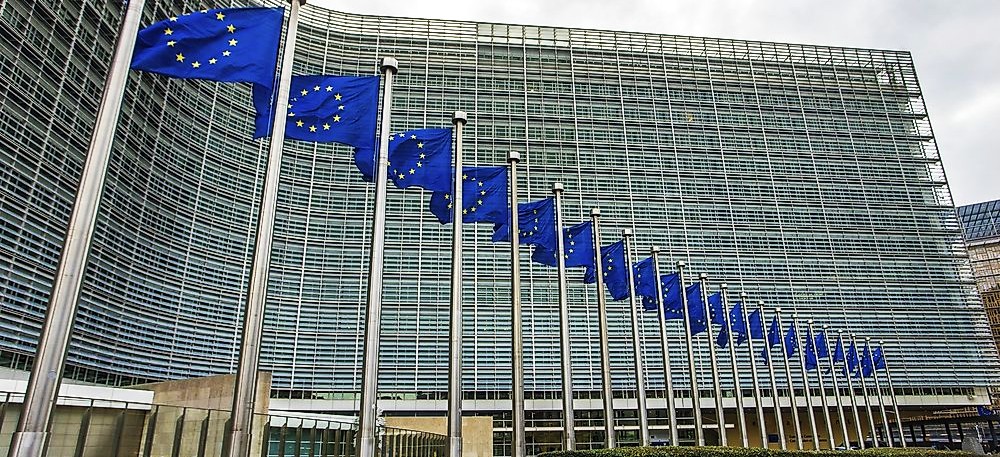
European Union Imposes Stiff Travel Ban on Cocaine King Bio and Cronies Effective Now as Drug Baron Bolle Jos’ Extradition & Transfer of Power Escalate
25 August 2026
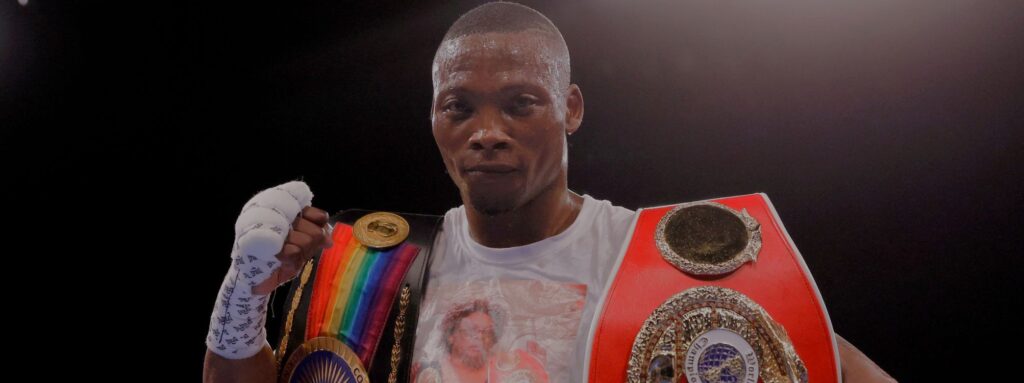
Former World Champion Boxer Zolani Tete Shot Dead in His Car Outside His Home in South Africa as He was Waiting for the Gate to Open
24 August 2026
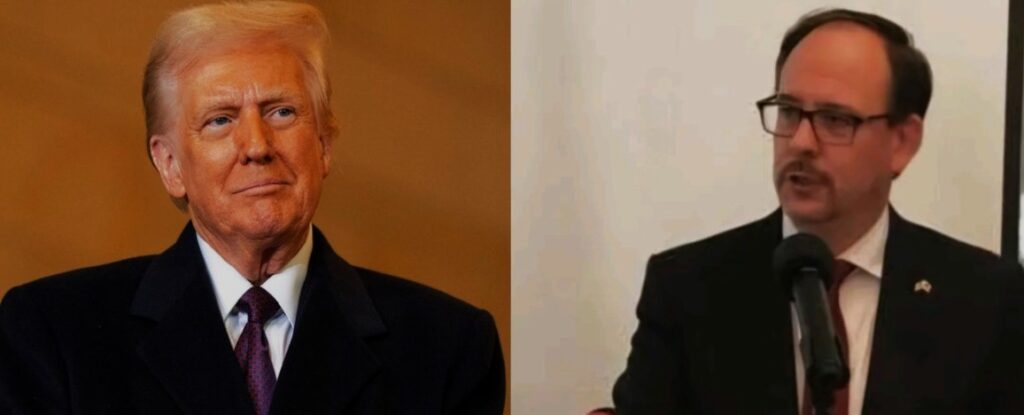
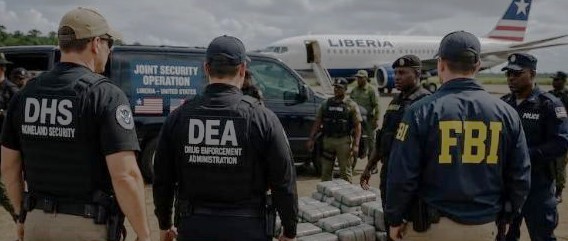
Cocaine Bio Baffled After Hearing USA’s Plans to Build Lungi Bridge; Bio Kept in the Dark, But the New Government Shall Erect It Among Others
23 August 2026